
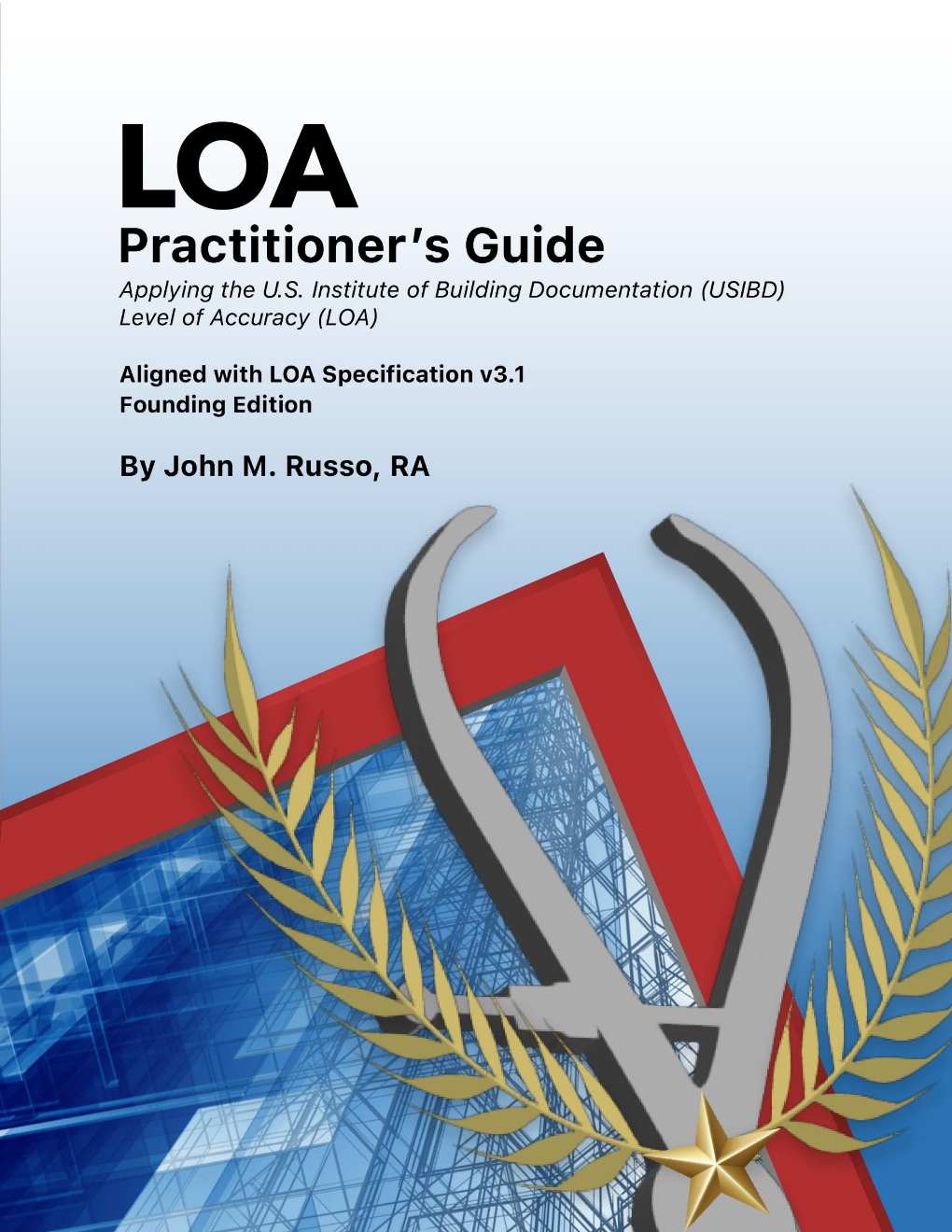
LOA Practitioner's Guide
Define Accuracy Before It Becomes Risk
A practical guide for applying the USIBD Level of Accuracy framework to real-world existing conditions documentation projects.
Get the LOA Practitioner's GuideAccuracy Is More Than a Technical Detail
Project risk often begins when teams assume they are working from reliable existing conditions information — without knowing how that information was captured, represented, or validated.
A model may look complete. A point cloud may appear dense. A drawing may be labeled “as-built.” But unless accuracy expectations are clearly defined and tied to the intended use, those deliverables may not support the decisions being made from them.
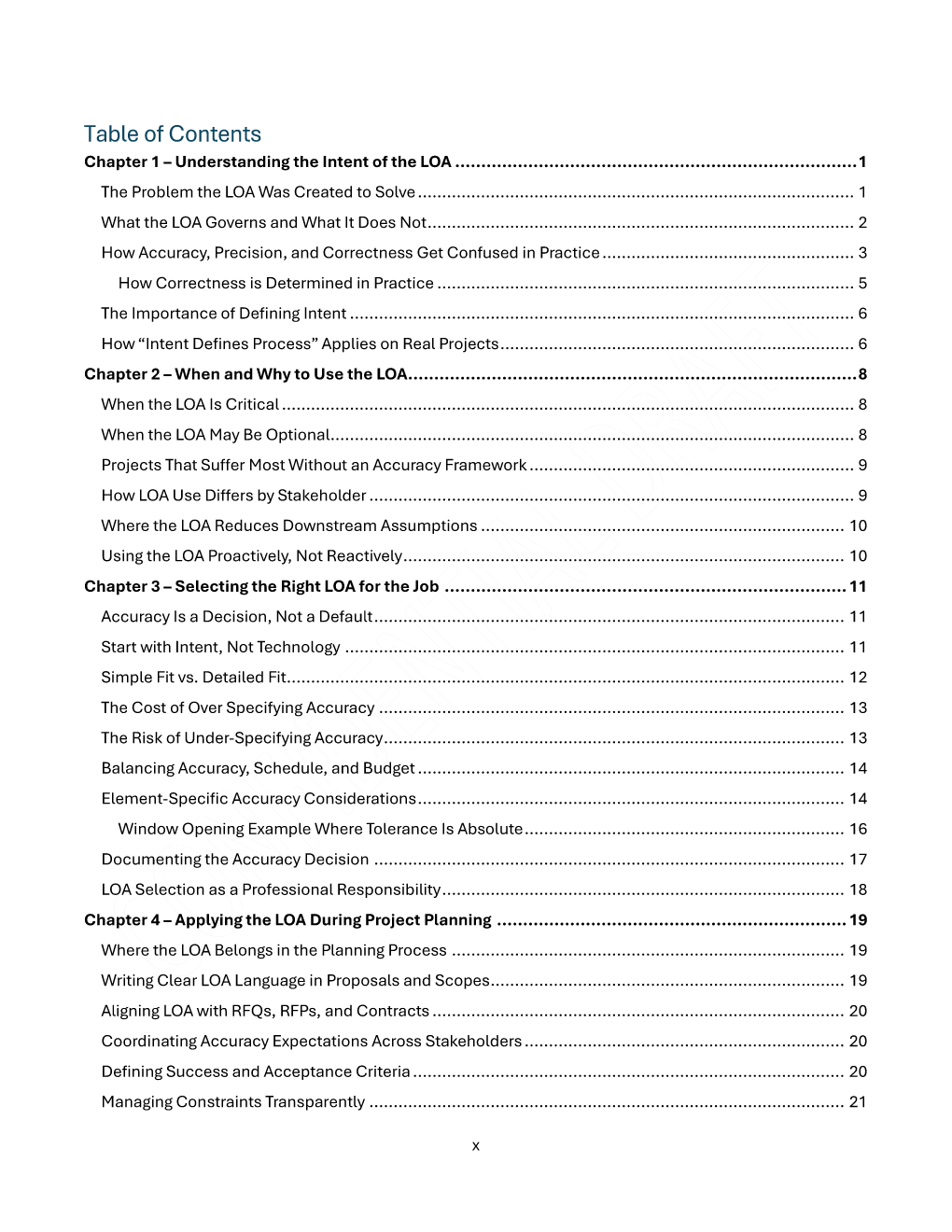
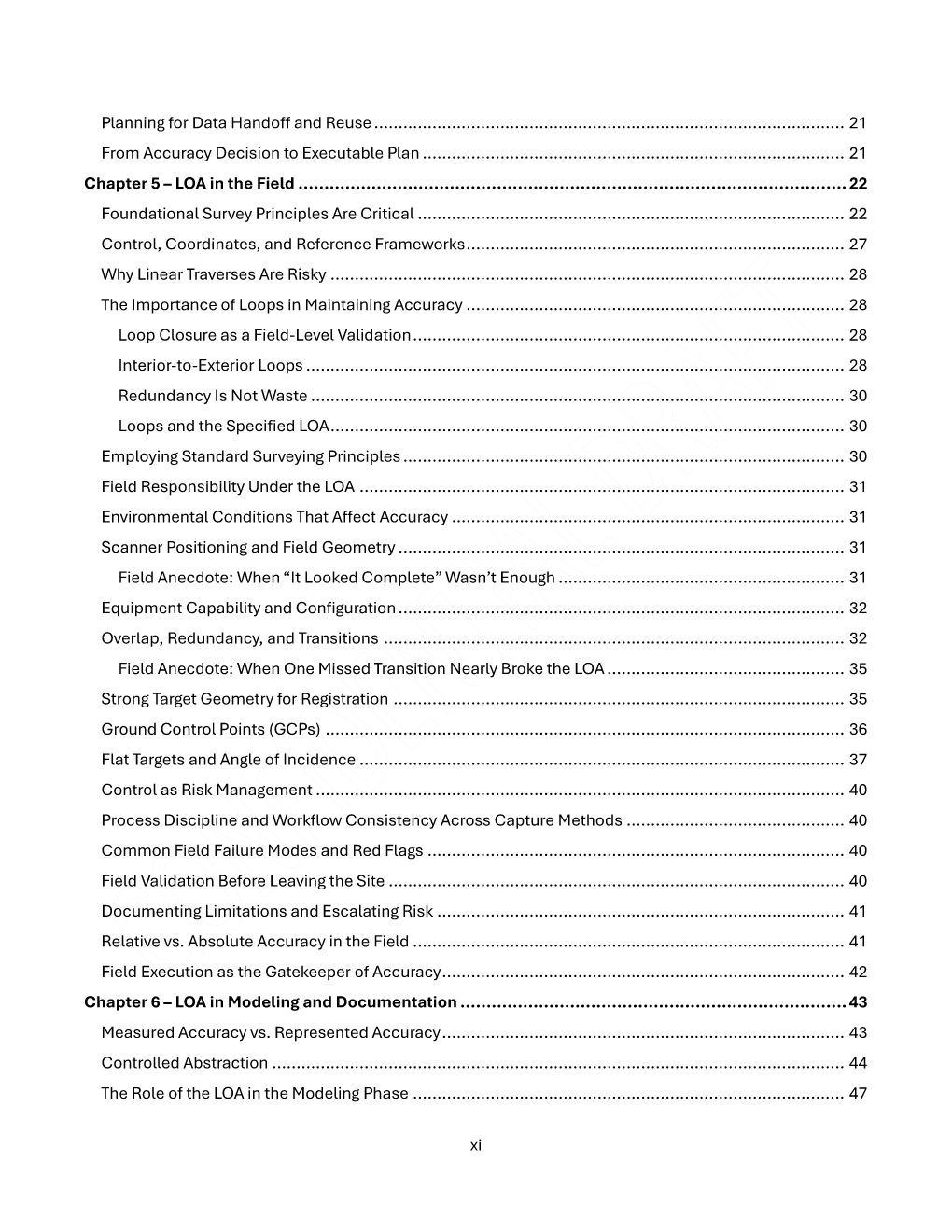
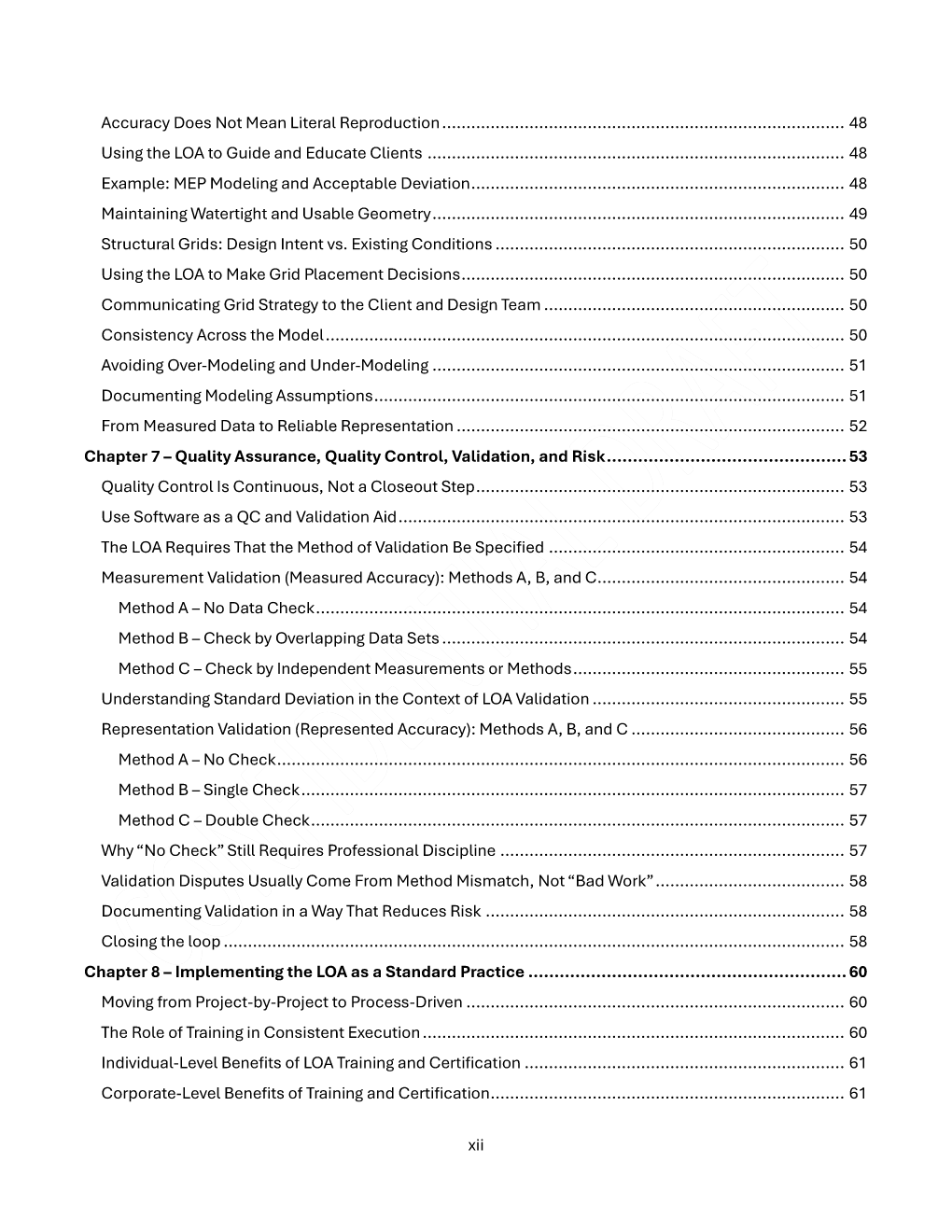
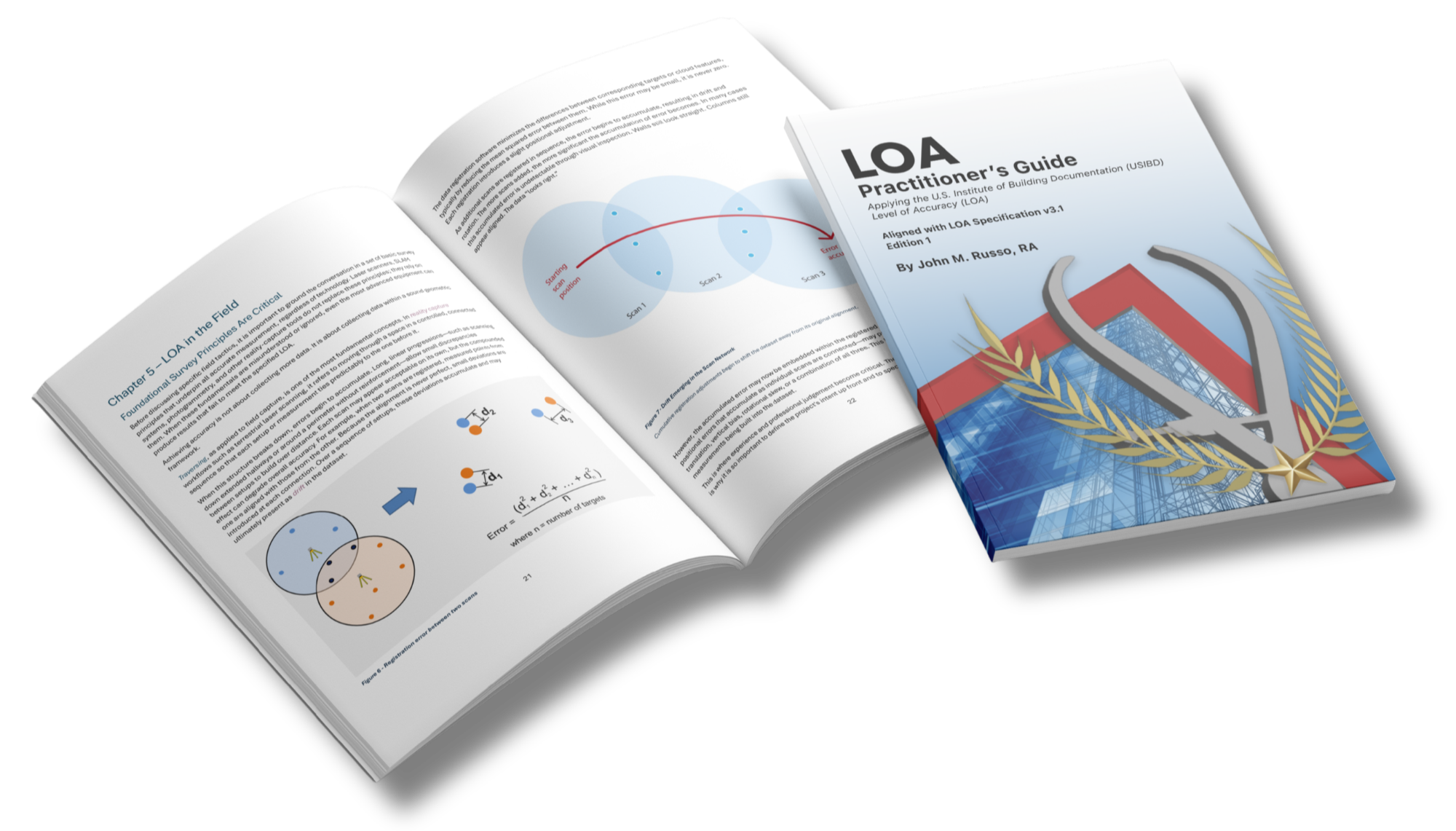
The LOA Practitioner’s Guide was created to help teams move beyond vague accuracy language and make more informed decisions about cost, risk, validation, and downstream reliance. It serves as a practical companion to the official LOA Specification, focusing on how LOA principles are applied across planning, scoping, field execution, modeling, validation, and delivery.
This guide helps project teams:
- Define accuracy expectations early
Clarify what level of accuracy is needed before documentation becomes the basis for design, coordination, construction, or facility decisions. - Connect accuracy to intended use
Understand why a planning study, renovation project, fabrication workflow, and digital twin initiative may each require different accuracy and validation approaches. - Reduce ambiguity and downstream risk
Avoid costly misunderstandings that can lead to redesign, field conflicts, coordination issues, delays, change orders, or disputes. - Balance cost, schedule, and confidence
Learn why over-specifying accuracy can increase cost without adding value, while under-specifying accuracy can create hidden project risk.

_
What You'll Learn

How to Select the Right Level of Accuracy
Understand how to choose the appropriate Level of Accuracy based on the project’s intended use, tolerance needs, cost, schedule, and risk.

How to Validate Accuracy, Not Just Request It
Learn why accuracy requirements must be measurable, verifiable, and clearly defined before teams rely on existing conditions information.

Measured vs. Represented Accuracy
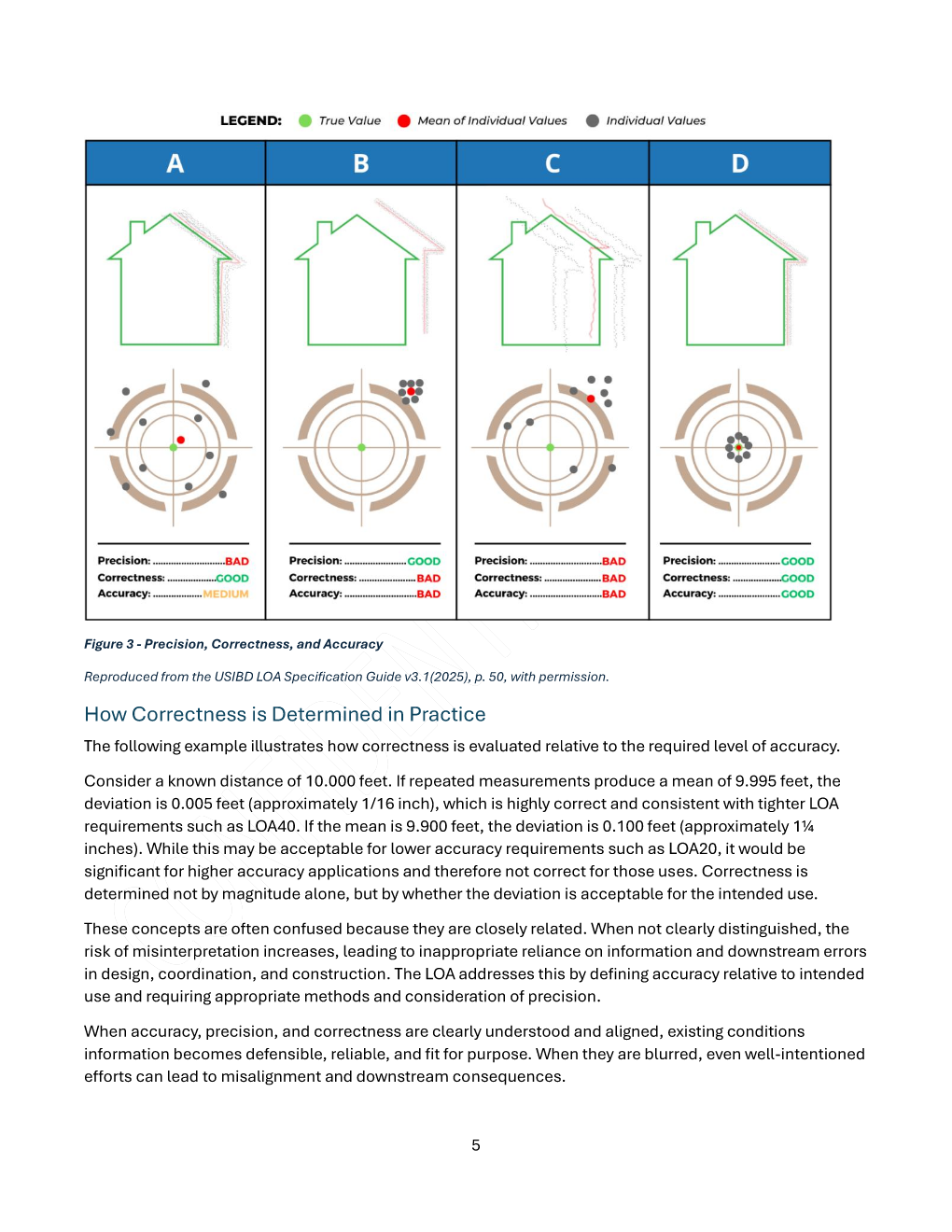
Recognize the difference between captured data and represented deliverables, including where assumptions, modeling decisions, and limitations can affect reliability.
Build Trust in the Information Your Projects Depend On
The future of building documentation will not be defined only by how quickly data can be captured. It will be defined by how reliably that data can be trusted.
The LOA Practitioner’s Guide gives owners, executives, project leaders, and practitioners a clearer way to understand accuracy, reduce ambiguity, and make better decisions using existing conditions information.
Get the LOA Practitioner’s Guide and start applying LOA with greater clarity and confidence.
Get the Guide